
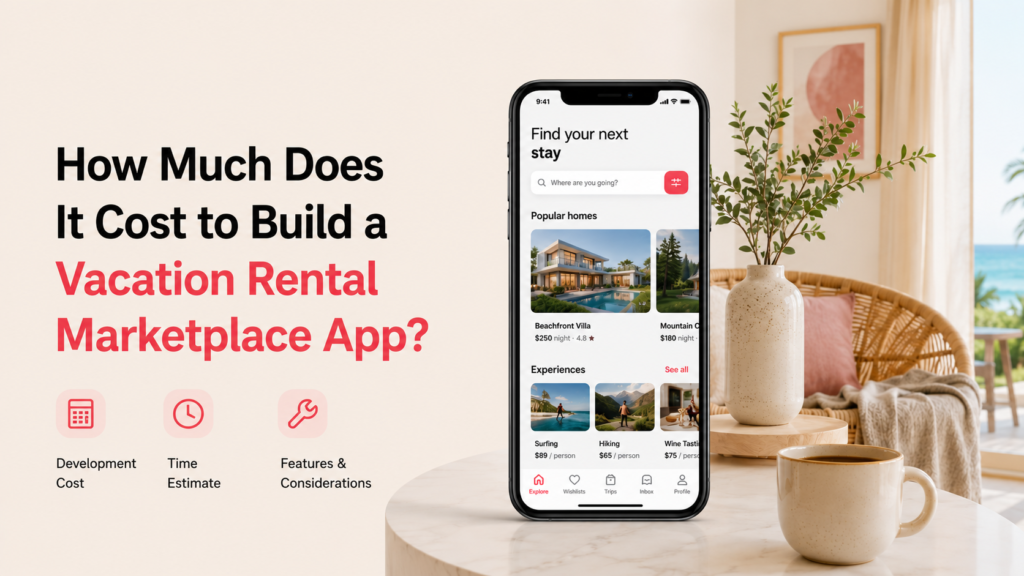
The vacation rental industry has transformed dramatically in recent years. Travelers are no longer limited to hotels when searching for accommodation, and property owners now have more opportunities to generate income from their homes, apartments, villas, and unique stays. This shift has created a growing demand for digital platforms that connect hosts with guests through seamless booking experiences.
Building a vacation rental marketplace app similar to popular platforms requires careful planning, investment, and a clear understanding of technology requirements. Entrepreneurs entering this market need to consider everything from app design and development costs to maintenance, marketing, security, and future scalability.
A vacation rental marketplace app is more than just a booking platform. It is an ecosystem that includes user profiles, property listings, payment systems, communication features, reviews, location services, and management tools. The total cost depends on several factors, including app complexity, development team location, features, technology stack, and ongoing operational expenses.
Understanding a Vacation Rental Marketplace App
A vacation rental marketplace app works as a digital platform where property owners can list their accommodations and travelers can search, compare, and reserve available properties. The application usually serves two primary user groups: hosts and guests, each requiring a smooth and reliable experience throughout the rental journey.
For guests, the app provides features such as property discovery, advanced filters, booking options, secure payment processing, messaging, and review systems. For hosts, it offers tools to upload property details, manage availability calendars, communicate with guests, monitor reservations, and maintain high service standards. Effective property management is also an important consideration for marketplace owners, as factors such as maintenance planning and expenses similar to the airbnb maintenance cost can influence the overall profitability and operational efficiency of rental businesses.
Behind these user-facing features is a comprehensive administrative system that helps platform owners manage users, transactions, disputes, listings, analytics, and day-to-day operations. These backend capabilities ensure that the marketplace remains secure, scalable, and easy to manage as the number of users and properties grows.
The complexity of these systems directly influences development expenses. A basic marketplace with limited features may require a smaller investment, while a fully developed platform with artificial intelligence recommendations, smart pricing tools, automated management solutions, and advanced analytics requires significantly more resources. Businesses must also consider ongoing operational factors, including platform maintenance, updates, and support, to ensure long-term success.
Average Cost to Build a Vacation Rental Marketplace App
The cost of building a vacation rental marketplace app can vary widely depending on the project requirements. On average, a basic version of the application may cost between $40,000 and $80,000. A medium-complexity platform with advanced features may range from $80,000 to $150,000.
For a large-scale marketplace designed to compete with established platforms, development costs can exceed $200,000. These platforms typically include advanced technology solutions, high-level security systems, multilingual support, automated pricing features, and extensive backend infrastructure.
Several factors influence the final budget:
- Number of platforms (iOS, Android, or both)
- Custom design requirements
- Backend complexity
- Third-party integrations
- Development team expertise
- Security requirements
- Testing and quality assurance
- Post-launch maintenance
Entrepreneurs should focus on creating a strong minimum viable product (MVP) before investing heavily in advanced features. An MVP allows businesses to test market demand, collect user feedback, and improve the application based on real customer behavior.
Key Features That Affect Development Cost
The features included in a vacation rental marketplace app have a major impact on development expenses. More advanced functionality requires additional development time, testing, and resources.
User Registration and Profiles
A smooth registration process is essential for both guests and hosts. Users should be able to create accounts using email, phone numbers, or social media platforms. Profile management features may include personal information, booking history, payment details, and verification options.
Adding identity verification improves trust but increases development complexity because it requires integration with external verification services.
Property Listing Management
Hosts need an easy way to add and manage rental properties. This feature usually includes uploading images, writing descriptions, adding amenities, setting prices, and managing availability.
A powerful listing system helps hosts present their properties effectively while giving guests detailed information before booking.
Search and Filtering Options
Travelers expect fast and accurate search functionality. Common filters include location, price range, property type, number of guests, amenities, ratings, and availability dates.
Advanced search features using artificial intelligence or personalized recommendations can improve user experience but require additional investment.
Booking and Reservation System
The booking system is one of the most important parts of the application. It must handle availability checks, reservation confirmations, cancellations, and booking notifications.
A reliable reservation system prevents double bookings and creates a smooth experience for both guests and hosts.
Payment Integration
Secure payment processing is essential for any vacation rental marketplace. Integration with payment gateways allows users to complete transactions safely.
Development costs may increase depending on the number of payment methods supported and the regions where the app operates.
Reviews and Ratings
Reviews build trust between guests and hosts. A rating system allows users to share experiences and helps maintain platform quality.
Features such as verified reviews, review moderation, and reporting tools may require additional development work.
In-App Messaging
Communication between hosts and guests is critical. A built-in messaging system allows users to discuss check-in details, property questions, and special requests without leaving the platform.
Real-time chat functionality requires reliable backend infrastructure and notification systems.
Technology Choices and Their Impact on Cost
Technology decisions play an important role in determining the overall development budget. Native app development for iOS and Android often provides excellent performance but may require separate development teams.
Cross-platform frameworks can reduce costs by allowing developers to build applications for multiple platforms using shared code. However, the best approach depends on business goals, performance requirements, and future expansion plans.
The backend infrastructure is equally important. A marketplace app requires secure databases, cloud hosting, API management, and systems capable of handling increasing user demand.
Choosing scalable technology from the beginning can help avoid expensive redevelopment as the platform grows.
Design and User Experience Investment
A successful vacation rental marketplace depends heavily on user experience. Travelers expect modern interfaces, fast loading times, and simple booking processes.
Professional UI/UX design includes user research, wireframes, prototypes, visual design, and usability testing. Investing in quality design helps increase customer satisfaction and improve conversion rates.
An attractive design should make property discovery simple while giving hosts efficient tools to manage their listings.
Development Team and Location Factors
The location and structure of the development team can significantly influence costs. Hiring developers in regions with higher labor costs generally results in a larger budget, while outsourcing to regions with competitive rates may reduce expenses.
Common development options include:
- In-house development teams
- Freelance developers
- Software development agencies
- Offshore development companies
Each option has advantages and challenges. Businesses should evaluate technical expertise, communication quality, portfolio experience, and long-term support before selecting a development partner.
Maintenance and Operational Costs After Launch
Launching the app is only the beginning. A marketplace requires continuous updates, security improvements, bug fixes, server management, and feature enhancements.
Many businesses underestimate ongoing expenses because they focus primarily on initial development costs. However, maintaining a high-quality platform is essential for retaining users and staying competitive.
Operational expenses may include cloud hosting, customer support, marketing campaigns, analytics tools, and software updates. Businesses also need to consider property management-related expenses. For example, understanding the Airbnb Maintenance Cost helps marketplace owners estimate how much effort and investment may be required to support hosts, improve property standards, and maintain customer satisfaction.
Regular maintenance ensures that the application remains compatible with new operating system updates and continues delivering a reliable experience.
Security Considerations for Vacation Rental Apps
Security is a major concern for any platform handling personal information and financial transactions. Vacation rental apps must protect user data, payment information, and communication records.
Important security measures include:
- Data encryption
- Secure authentication systems
- Payment security standards
- Regular vulnerability testing
- Privacy compliance
- Fraud detection mechanisms
Building strong security systems may increase initial costs, but it protects the business from potential financial losses and reputation damage.
How to Reduce Development Costs Without Sacrificing Quality
Creating a successful marketplace does not always require building every feature immediately. Businesses can reduce expenses by focusing on essential functionality first.
Some cost-saving strategies include:
Start With an MVP
An MVP allows businesses to launch quickly with core features such as user accounts, property listings, search, booking, and payments. Additional features can be added after analyzing user feedback.
Use Existing Solutions
Third-party tools for payments, maps, notifications, and analytics can reduce development time. Instead of creating every system from scratch, businesses can integrate reliable external services.
Prioritize Features
Not every feature provides equal value. Identifying the most important features for users helps allocate resources effectively.
Plan for Scalability
Although reducing initial costs is important, businesses should avoid choices that create expensive technical problems later. A scalable foundation supports long-term growth.
Revenue Models for Vacation Rental Marketplace Apps
A well-designed revenue model helps recover development costs and generate sustainable income. Popular monetization strategies include:
Commission Fees
The platform charges hosts or guests a percentage of each completed booking. This is one of the most common marketplace revenue models.
Listing Fees
Hosts may pay a fee to publish their properties on the platform. Premium listing options can generate additional revenue.
Subscription Plans
Businesses can offer subscription packages with advanced tools, analytics, or promotional benefits for hosts.
Advertising Opportunities
The platform can provide advertising options for property owners or travel-related businesses.
Choosing the right revenue model depends on the target market, competition, and user expectations.
Future Trends in Vacation Rental Marketplace Development
The vacation rental industry continues evolving with new technologies. Artificial intelligence, automation, smart home integrations, and personalized recommendations are becoming increasingly important.
AI-powered systems can help users discover relevant properties, predict pricing trends, and improve customer service through automated assistants.
Smart home technology can enhance guest experiences through digital locks, automated check-in systems, and connected devices.
Sustainability is another growing trend. Many travelers now prefer eco-friendly accommodations, creating opportunities for platforms that highlight sustainable properties.
Final Thoughts
Building a vacation rental marketplace app requires significant planning, investment, and technical expertise. The total cost depends on the complexity of the features, the development approach, the design requirements, and the long-term business goals.
A basic app may require tens of thousands of dollars, while a large-scale platform with advanced capabilities can require a much larger investment. Beyond development, businesses must budget for maintenance, security, marketing, and continuous improvement.
Factors such as operational support, platform reliability, and property quality management also influence long-term success. Understanding expenses related to areas like Airbnb Maintenance Cost can help entrepreneurs create realistic financial plans and build stronger marketplace strategies.
With the right approach, a well-designed vacation rental marketplace app can create valuable opportunities for travelers, property owners, and businesses. By focusing on user experience, scalability, and innovation, entrepreneurs can develop platforms capable of competing in the growing global vacation rental market.
The key to success is not only building an app but also creating a trusted ecosystem where guests enjoy seamless travel experiences and hosts can manage their properties efficiently.