The rapid growth of e-commerce has revolutionized the storage, management and delivery of goods. Due to high consumer expectations regarding the speed of deliveries, real time order tracing, as well as smooth online shopping, there is immense pressure on warehouses to achieve maximum efficiency and accuracy. In response to this pressure, many organizations are currently investing heavily in the automation of warehouses.
The proliferation of online trade throughout the world means that the automation of warehouse processes are no longer considered an optional advantage but rather a necessity. In addition, the implementation of the automated storage system, robotics and the AI as well as the IoT technology assist many organizations to manage their inventory better, speed up order fulfillment processes and optimize the supply chain.
The growth of the warehouse automation market can also be evidenced from the market projections. The most recent report from Expert Market Research states that The warehouse automation market reached a value of USD 23.16 Billion in 2025 and is predicted to reach USD 93.70 Billion in 2035 growing at a compound annual growth rate (CAGR) of 15.00% between 2026 and 2035.
Understanding Warehouse Automation
Automated Warehouse Automation is the technology in which warehouse processes such as receiving, storing, putting away, picking, sorting, transporting and managing outbound shipments are mechanized using technology, rather than depending solely on the workforce, which lead to efficient workflows, increased productivity and accuracy. It has been becoming essential for warehouse businesses to adopt automated solutions, due to the rise of demand by the consumers.
Modern warehouse automation solutions include:
- Automated Storage and Retrieval Systems (AS/RS): Improve storage efficiency while reducing manual handling.
- Autonomous Mobile Robots (AMRs): Transport goods safely and efficiently across warehouse facilities.
- Automated Guided Vehicles (AGVs): Handle repetitive material movement with minimal human intervention.
- Robotic Picking and Packing Systems: Increase order fulfillment speed and accuracy.
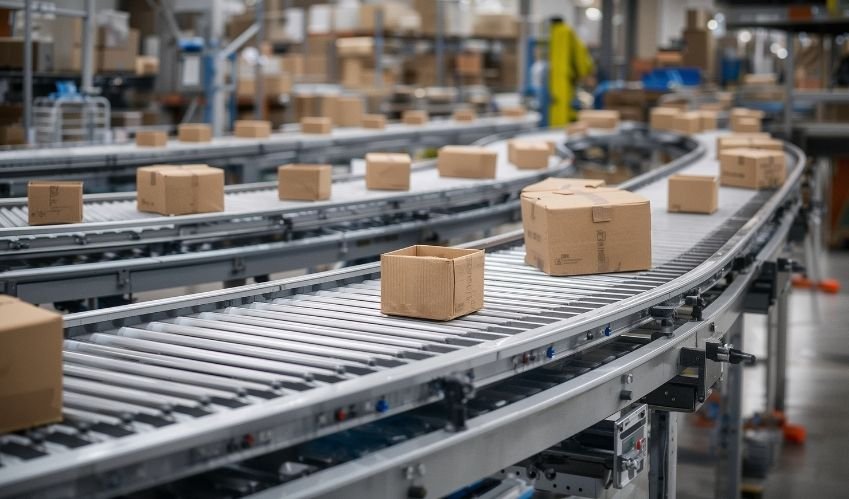
- Conveyor and Sorting Systems: Streamline product movement throughout the warehouse.
- Warehouse Management Systems (WMS): Provide real-time inventory tracking and workflow optimization.
- AI-Powered Inventory Optimization: Forecast demand and improve stock management.
- IoT-Enabled Monitoring Systems: Offer real-time visibility into warehouse assets, equipment, and inventory.
Together, these technologies enable warehouses to process larger order volumes with greater speed, precision, and operational efficiency.
The Rise of E-Commerce and Its Impact on Warehousing
Onlineshoppingtrendscancelpreviousshoppingbehaviorssamesamedayornextdaydeliveryaccuraciesinfulfillmentandhasslefree return policies are today customers expectations,which requires a high-performing warehouse in terms of operations which would handle several thousand orders a day.
Howevertraditional processes of the warehouses fail to keep up with rapidlychanging demands in terms of order volume such as during promotions or during the holidays. Warehouse automation helps organizations increase the speed of the fulfillment process,without increasing complexity and reducing the costs. The examples of several e-commerce businesses that adopted automations to have greater performance,reduced cost,while improving the services provided can push business in the industry to explore this solution.
Increasing Order Volumes Are Driving Automation
Increased Online Sales. Another key influence pushing warehouse automation is the rising online sales figures globally. Whether e-commerce sales were 1,000 or 10,000 for the day, they will always necessitate order management, product selection, bagging and packaging, labeling and shipping procedures.
However as volumes steadily rise the more orders that need managing, the higher the likelihood for manual error. Automated solutions allow warehouses to process thousands of orders concurrently while still upholding accuracy – making peaks in customer orders (like in the run-up to holidays) achievable without exponentially raising workforce expenses.
Faster Deliveries Require Smarter Warehouses
Today’s consumers want to be kept informed, with their shipment being tracked in real-time and delivery times being accurate. Warehouse automation makes the difference, by allowing faster picking and picking times and quicker dispatch and reducing the time spent searching for products.
Autonomous mobile robots, intelligent conveyor systems, or automated sortation can dramatically decrease transportation times within the facility, letting companies ship products faster.
Artificial Intelligence Is Enhancing Warehouse Operations
Artificial intelligence has become a valuable tool for warehouse optimization. AI-powered systems analyze operational data to forecast demand, optimize inventory placement, improve workforce scheduling, and predict equipment maintenance requirements.
Machine learning continuously refines warehouse operations by identifying inefficiencies and recommending process improvements. As AI capabilities continue to evolve, intelligent automation will become increasingly important for maximizing warehouse productivity.
Robotics Are Transforming Fulfillment Centers
Warehouse robotics have advanced considerably in recent years. Modern robotic systems assist with product picking, order sorting, pallet movement, packaging, and inventory counting. Collaborative robots, or cobots, work safely alongside warehouse employees, reducing repetitive tasks while improving operational efficiency.
Robotic automation also helps businesses overcome labor shortages and maintain consistent productivity during periods of peak demand.
Warehouse Management Systems Improve Visibility
Warehouse Management Systems (WMS) act as the central control platform for warehouse operations. These systems provide real-time inventory visibility, automate order processing, monitor employee productivity, and generate detailed performance reports.
Cloud-based WMS solutions allow organizations to manage multiple warehouse facilities from a centralized platform, improving coordination across the entire supply chain.
IoT Is Creating Connected Warehouses
The Internet of Things (IoT) enables warehouses to become more connected through smart sensors and monitoring devices. IoT technology tracks inventory movement, equipment performance, storage conditions, and machine health in real time.
Continuous monitoring helps reduce equipment downtime, improve inventory accuracy, and support predictive maintenance strategies that enhance operational reliability.
Benefits of Warehouse Automation
Businesses adopting warehouse automation experience numerous operational and financial benefits that improve long-term competitiveness.
Key benefits include:
- Improved Productivity: Automated systems perform repetitive tasks faster, enabling higher warehouse throughput.
- Higher Accuracy: Automation minimizes picking, packing, and inventory errors, leading to greater customer satisfaction.
- Lower Operating Costs: Reduced labor requirements and fewer operational mistakes contribute to long-term cost savings.
- Better Inventory Management: Real-time tracking improves stock visibility and prevents inventory shortages or overstocking.
- Enhanced Workplace Safety: Automation reduces employee exposure to physically demanding and hazardous tasks.
- Greater Scalability: Automated warehouses can efficiently manage increasing order volumes without proportionally expanding the workforce.
Challenges in Warehouse Automation
But warehouse automation, while promising, also has a number of hurdles to overcome. One of the most significant issues is the cost: Automated solutions can require a hefty investment in the equipment and software, making them out of reach for many smaller companies. In some cases, it’s not as simple as “plug-and-play” – integrating automation technology into a company’s existing business software system can be challenging.
There’s also a significant investment in employees that are needed to run and manage new automation equipment. As warehouses become more interconnected, cybersecurity will also be a concern when it comes to securing operational data and keeping systems up and running.
Regional Market Outlook
North America continues to lead the warehouse automation market due to advanced logistics infrastructure, widespread robotics adoption, and strong e-commerce activity. Europe is experiencing steady growth through investments in smart manufacturing and supply chain modernization.
Meanwhile, Asia-Pacific is expected to witness the fastest expansion, driven by rapid industrialization, increasing online retail sales, and significant investments in warehouse automation technologies across China, Japan, South Korea, and India.
Future Outlook
Warehouse automation the warehouse automation market gained $23.16 billion in 2025, and it’s expected to increase by 15.00 percent between 2026 and 2035, at approximately $93.70 billion in 2035, with all signs pointing to continued rapid growth in this sector as online retail continues to flourish worldwide, fueled by automation technologies such as machine learning, robotics, IoT, cloud technology, and big data, which are turning warehouses into “smart” warehouses that operate with a high level of automation to manage order fulfillment more effectively and provide more flexibility for business needs.
Conclusion
E-commerce has become one of the strongest forces driving warehouse automation worldwide. As businesses face increasing pressure to deliver products faster and more accurately, investments in AI, robotics, IoT, and warehouse management systems continue to accelerate. Organizations that embrace automation today will be better positioned to improve operational efficiency, reduce costs, and remain competitive in the rapidly evolving digital commerce landscape.